Cinema PSYCH: CHAPPiE
Rarely does a film come along that offers equal parts full-throttle bravado, tender-hearted sentimentality, and rich grist for the philosophical mill, but this is exactly what Neill Blomkamp (Elysium, District 9) achieves in his latest contribution to the science-fiction milieu of robotics. I'm not a film critic, so I'm not going to write this article as if I were one, yet I will say this: CHAPPiE is brilliant.
Set against the anarchistic backdrop of a future Johannesburg, CHAPPiE depicts the world as a harsh and violent place, a world where the weak are bullied and intimidated by the strongest and most aggressive, a culture of cruelty, of poverty, of graffiti-stained ruins in which total disorder and lawlessness is held in check, only just barely, by the world's first robotic police force—droid grunts programmed to mindlessly detect and eradicate criminals according to the dictates of their software.
The visionary genius responsible for inventing these automatons is Deon Wilson (Dev Patel), a thin-limbed and docile engineer who initially aspired toward a higher calling, to create "a machine that can think and feel; a machine that can judge art and decide if it likes it, write music and poetry," a fully sentient robot. When Deon is denied permission to test his latest software (consciousness.dat), he takes matters into his own hands, stealing one of the paramilitary prototypes, Scout 0022, a damaged droid scheduled for destruction.
Enter Ninja and Yolandi (of South Africa's rap-rave tandem Die Antwoord), a Bonnie-and-Clyde-like duo of outlandish, gun-wielding gangsters who, along with their partner Amerika, kidnap Deon and force him to install his experimental software into Scout 0022 for the purpose of getting the robot to fight for them. [On a side note, this film made me an instant fan of Die Antwoord, everything about them. They are, without question, the heart and soul of this movie, as well as its heroes.]
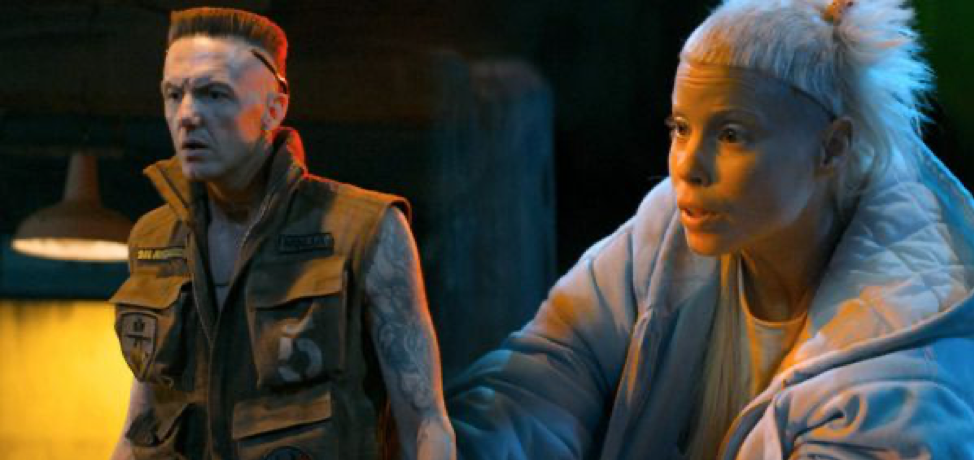
Ninja (left) and Yolandi (right)
From a psychotherapy standpoint, this is where the film becomes truly fascinating. Like a human, CHAPPiE knows nothing at birth. "He has to be taught," Deon explains. Okay, but by whom? And toward what end? While Deon wants CHAPPiE to realize its fullest potential as a highly moral, intellectually and artistically advanced being, this personal vision contrasts starkly with that of his captors, whose intentions are set solely on turning CHAPPiE into an "indestructible robot gangster number one. . . the illest gangster on the block." As in life, the child is born as a tabla rasa, to be thereafter shaped—continually so—by a variety of persons, each with their own set of motivations, ambitions, and methods.
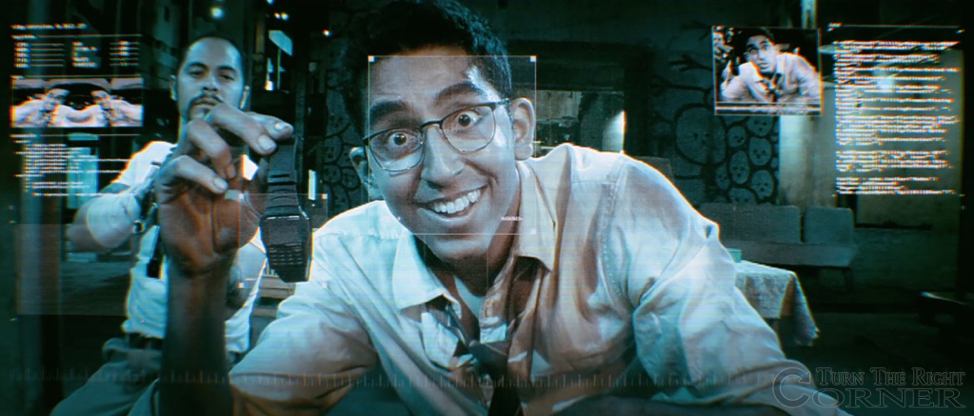
Deon through CHAPPiE’s eyes, while Amerika watches from behind
Each of the main characters of the film employ wildly different approaches to parenting young CHAPPiE. Deon (above) epitomizes the well-intentioned and caring paternal figure who aims to instill values into his offspring by way of advice-giving and didactic teaching, uttering statements like: "Have respect for me. I'm your maker, CHAPPiE" and "Don't let people take away your potential, CHAPPiE." Deon wants what's best for his creation, but remains prejudiced in his perception of what this looks like, who he wants CHAPPiE to become. "You must bring peace to a world in chaos. Remember, no matter what happens, you were made for good." The bonding between Deon and CHAPPiE is strong, if not particularly warm or affectionate.
Ninja, in contrast to Deon, seeks to toughen CHAPPiE up through a brutish type of “tough love” that oftentimes borders on abusiveness. Ninja’s goals are to transform CHAPPiE into an unstoppable fighting machine, a weapon to be used for the gang's personal gain. Despite the fierceness of Ninja's approach, it is Ninja who CHAPPiE calls Daddy and an irrefutable bond between them develops, much to Deon’s chagrin.
What's similar between Deon and Ninja is that both attempt to shape CHAPPiE according to their own likeness. Yolandi’s approach provides an alternative option. Despite her rugged ways, Yolandi parents CHAPPiE sweetly and softly. She talks to CHAPPiE about the soul within him, telling him "that's who mommy loves, the CHAPPiE inside," pressing her hand against his chest. She seeks to protect and defend CHAPPiE, standing up to both Deon ("Stop lecturing him. I thought you were going to teach him stuff." — which, by the way, is an astute distinction) and Ninja ("He's not stupid. He's just a kid."). Unlike Deon and Ninja, Yolandi supports and accepts CHAPPiE exactly as he is, reminding him that it is okay to be the black sheep, okay to be different from the other Scout robots, okay to be one-of-a-kind, okay to be himself.
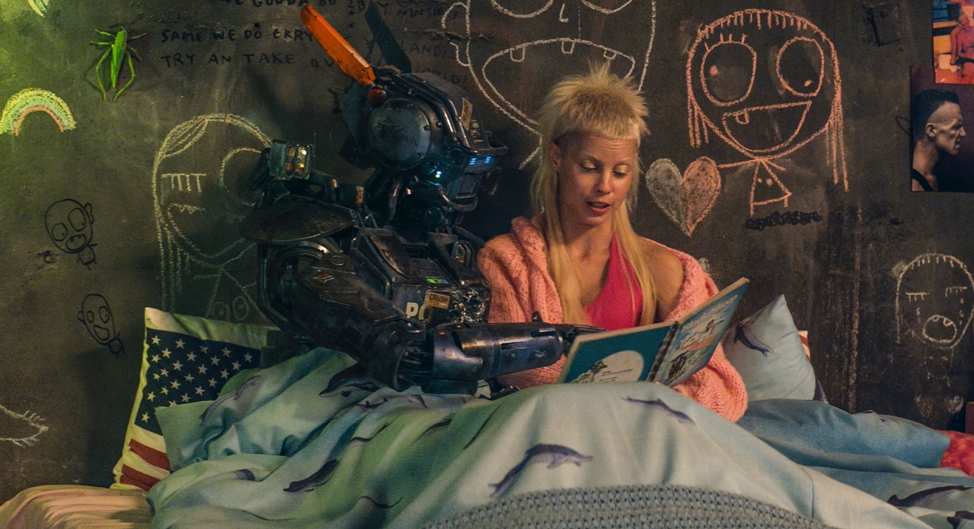
Yolandi reads a bedtime story to CHAPPiE
Like any child, CHAPPiE develops his personality according to the infinitely complex montage of influences exerted upon him. In the film, this results in a morally-conflicted robot comically adorned in gold chains and spray-paint-stenciled tattoos, with a gangster's gait and slang-heavy diction. CHAPPiE’s adult consciousness is part Ninja, part Yolandi, part Deon, part Amerika (who serves as a brotherly role model), and, well, yes, part original CHAPPiE.
In watching CHAPPiE, it's hard not to reflect upon questions of nature versus nurture. Who are we at the moment of our birth? What is our original nature? As we age, how much of our nascent self remains? As parents and siblings, classmates and friends, teachers and strangers, all leave their large or small marks upon our evolution, how much of who we appear to be is not really us, but the legacy of those who have acted upon us? If we could look beyond conditioning, seeing past the superficial manifestations of each person's distinct upbringing, including our own, what would we see? Would we see that all humankind share a common nature, a design toward goodness, innocence, love? (The film suggests an answer, but no spoilers allowed here. Go watch it!)
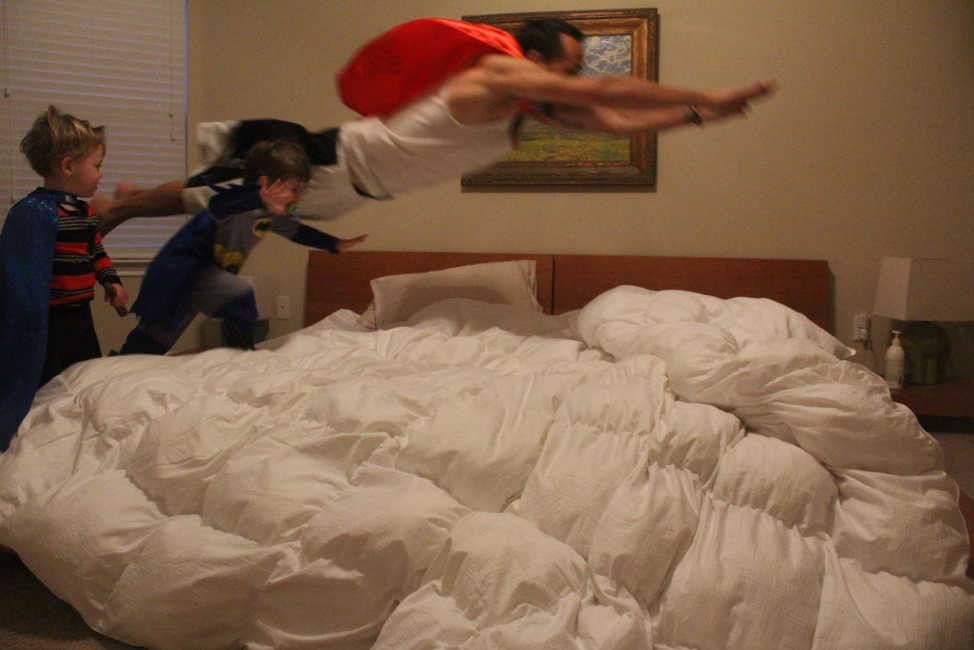
As a parent myself, it's sometimes hard to admit that I do not have singular sway over how my own children are raised from birth to adulthood. Whether I like it or not, I must share the privilege (and responsibility) with others. Some will help shape them in the ways I desire; some, inevitably, will not. As a result, my sons will not turn out exactly as I hope, but that's okay. It's okay because nothing can change their original nature and, as long as I recognize this nature (and help them recognize it in themselves), I will love and adore them all the same regardless of how their life may shape them. Over the years to follow, I will care progressively less about having a hand in creating them and more about what I am far better able to control, namely, maintaining a vibrant companionship with them, whoever and however they may be.