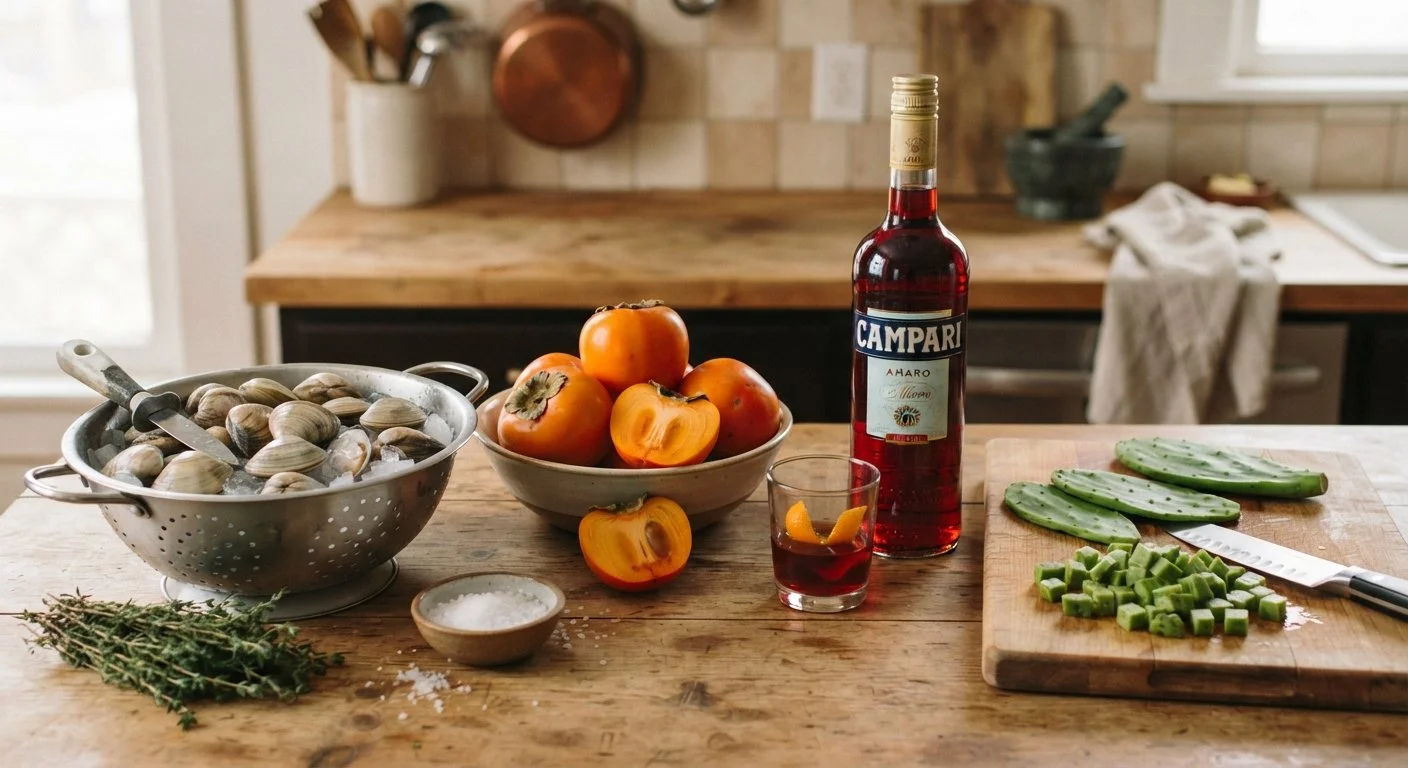
Life lessons can be found in the most unexpected of places. This particular one comes from a cooking show on The Food Network called Chopped where, in each episode, four chefs compete with one another to impress a panel of judges. At the start of each of the three timed rounds that will ultimately determine a winner (appetizer, entrée, dessert), the chefs are given a basket containing four “mystery ingredients”. Once the clock starts, the chefs open their baskets to see, for the first time, which—usually quite peculiar—ingredients they must somehow include in their dishes. Thus the culinary improvisation begins, as time steadily dwindles.

To provide an idea of just how challenging these mystery ingredients can be, here are a few of examples of actual combinations that have been used on the show:
ground beef + cannellini beans + tahini paste + grape jelly
knockwurst + pretzels + ramps + mangosteen
Asian pears + croissants + haricots verts + rattlesnake meat
quahog clams + fuyu persimmons + Italian bitters + nopales
Yikes!
So strange can the provided items be that even the competing cooks are frequently unfamiliar with one or more of the mystery basket ingredients. Regardless, the challenge remains: use your skills as a chef—along with as many additional ingredients from the Chopped pantry as desire—to create the most delicious dish possible in the time allotted.
“Your time starts now.”

In counseling, I’ve grown fond of using this show as a metaphor for what happens whenever we interact with another person.
In our daily life, we’re like a chef on Chopped and everyone we encounter presents us with a basket of mystery ingredients. We never know exactly what we are going to confront when the basket opens. Maybe we’ll find ingredients we know very well and enjoy cooking with—such as smiles, kindness, friendliness, calm—or maybe we’ll find something we’ve never seen before or would rather not face—such as scowls, temper, accusations of wrongdoing, irritability, impatience. Once the mystery basket that is another person opens up, our challenge remains the same: use our skills and any ingredients from our personal pantry to create the most successful dish (i.e., interaction) possible.
Any chef on Chopped that were to waste time complaining about not knowing what a mangosteen is or balking at never having cooked with nopales before would be certain to lose. When confronted by something “mysterious”, a skilled chef would immediately taste the ingredient, discover its flavor and texture, and do their best—guided by past experiences with similar ingredients—to effectively incorporate it into something delicious. Whenever a dish turns out poorly, it’s never the ingredients’ fault. It boils down to the chef.
This is easy enough to understand when it comes to cooking, but it’s also a healthy and empowering way to view the role we play in our relationships.
Every encounter in life is an opportunity to see ourselves as a chef. We can take full responsibility to create the very best interactions possible by being willing to work with whatever ingredients we’re given from one moment to the next, and from one person to the next, without judgment, complaint, or protest. If someone is confrontational towards us, okay, we work with that. If someone is sad or confused, defensive or nervous, anything at all, then so be it; we let these be our mystery basket ingredients. With skillfulness, we can use these components and transform them into a satisfying meal.

And just as chefs continually cultivate and improve their cooking prowess, we can always become more skillful in how we interact with and engage others. Knowing this, the next time an interpersonal exchange doesn't go all that well, resist any and all temptation to blame your ingredients (the other person), no matter how weird or off-putting the ingredients they gave you might have been. Take ownership of your dish, as they say in the cooking world. Know that you prepared the best dish you were capable of given your current capabilities. Give yourself permission for this, as well as giving yourself permission to master new techniques and abilities. Build your repertoire, your pantry. Consider what you might say or do differently under similar circumstances in the future. In this way, if you truly focus on yourself and yourself only, your skillfulness as a chef (of interpersonal communication) will grow. Then, the next time you’re asked to make a meal out of quahong clams, persimmons, Italian bitters, and nopales, for instance, you’ll be better equipped to do so.